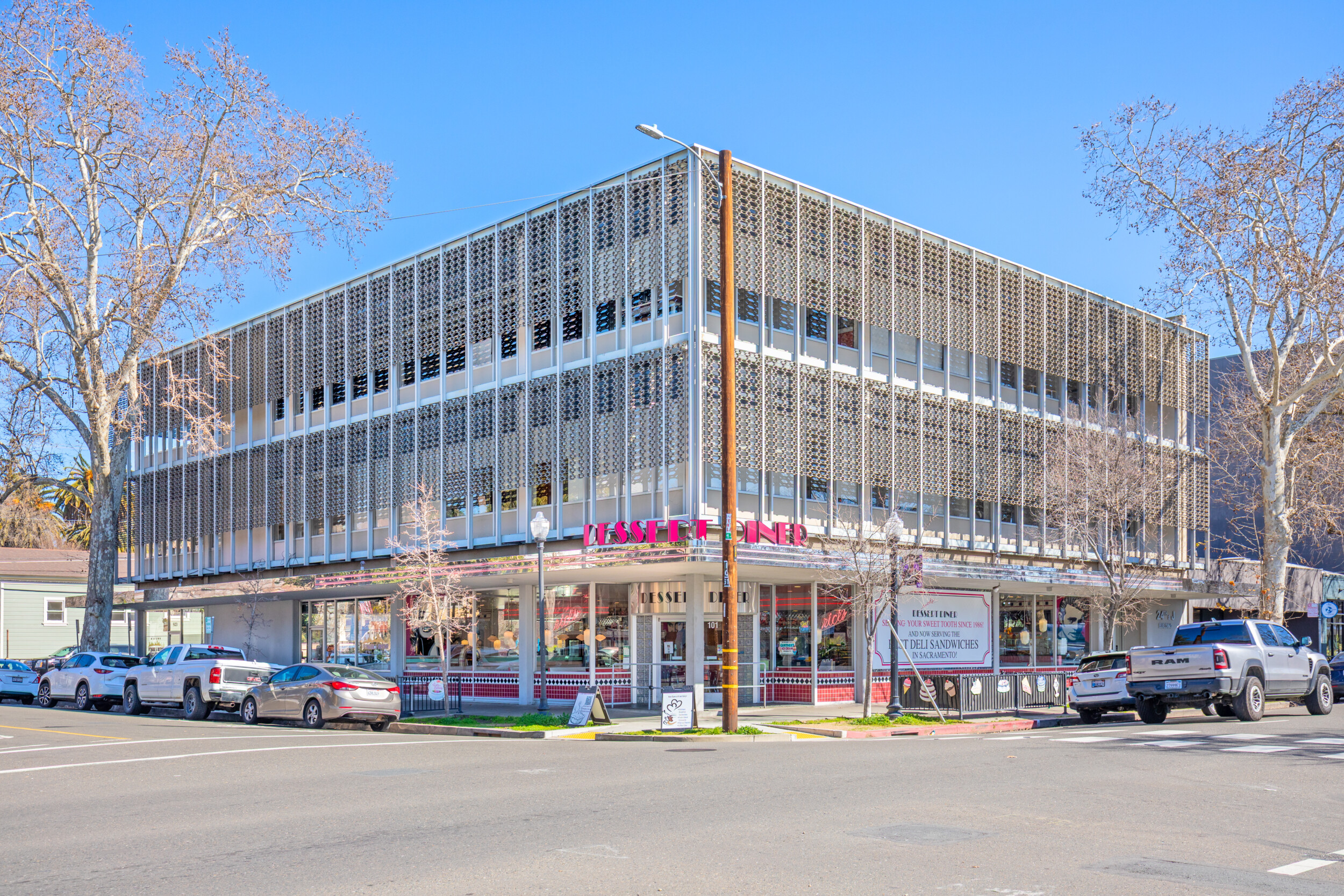
GRID Blog: Urban properties give you more to love than location.
Source: Turton Commercial Real Estate
Brokers: David Khedry
That’s right… urban core properties want you to love them for more than their great location.
For an owner-user or investor evaluating property in Sacramento’s urban core, the strongest opportunities often come down to four factors that are easy to overlook at first glance: the building itself, the parking situation, the land beneath it, and the district surrounding it.
A great address may get you through the door. Understanding these four elements can determine whether the property actually works.
THE ARCHITECTURE CAN BE AN ASSET AND AN OBLIGATION
Take a five-minute walk through Sacramento’s urban core and you will encounter mid-century modern, Victorian, Brutalist, Moderne and Art Deco buildings alongside historic masonry structures. Some are beautifully preserved. Others are waiting for their next chapter.
That architectural character can be one of the strongest reasons to buy an urban property. A distinctive building can reinforce a company’s identity, create a memorable customer experience, and offer something newer construction cannot replicate.
But older architecture also requires more diligence.
Historic buildings may have preservation requirements or design considerations that limit exterior alterations. An architect familiar with historic properties can help determine which features should be retained and how the building can be modernized without compromising its architectural value.
Buyers should also understand the potential cost of bringing an older property up to current standards. ADA accessibility, Title 24 requirements and conventional capital improvements can all affect the acquisition. Antiquated HVAC systems, boilers and chillers, aging roofs, single-pane windows and deferred maintenance should be evaluated early.
The architecture may be what makes the property special. It can also materially affect the renovation budget.
PARKING CAN CHANGE THE ECONOMICS
Parking is another major consideration, particularly with older urban buildings that were constructed long before today’s parking expectations.
A property may have little or no dedicated parking, requiring employees, customers or tenants to rely on nearby public garages, private lots or street parking. Availability, cost and distance should all become part of the underwriting rather than an afterthought.
The opposite can also be true.
An urban property with more parking than its users require may create an additional income stream. Depending on the location and demand, excess spaces can potentially be leased separately, generating additional monthly revenue for the owner.
In an urban acquisition, parking is not simply an amenity. It can be an operating expense, a leasing issue or a source of income.
THE BUILDING MAY NOT BE THE ENTIRE OPPORTUNITY
Then there is the land itself.
Urban parcels are not always used efficiently. Some properties maximize nearly every square foot of their site. Others may have a relatively small building surrounded by surface parking, yard area or other underutilized land.
Consider a 7,000 SF building sitting on a 12,800 SF parcel. The existing building may be the immediate reason for the acquisition, but the remaining land could hold additional value.
Depending on zoning, site configuration, parking requirements and other development constraints, excess land may support an additional commercial or residential use. Surface parking, yard area or another underutilized portion of the property could create future development potential, particularly in areas where zoning allows greater density.
That means buyers should evaluate more than what exists today. They should also understand what the site may allow tomorrow.
KNOW WHAT YOUR PBID DOES
Finally, buyers should understand whether the property sits within a Property-Based Improvement District, or PBID.
PBIDs allow commercial property owners within a defined district to collectively fund supplemental services and improvements. In Sacramento’s urban core, these include organizations such as Midtown Association, Downtown Sacramento Partnership, R Street Sacramento Partnership, Broadway Partnership and the River District.
Properties within these districts are subject to an additional assessment, which should be incorporated into operating expenses.
That assessment also supports services that can directly affect the surrounding business environment, including clean and safe programs, community events, district marketing, public-space improvements and property owner advocacy.
For an investor or owner-user, understanding both the cost and the services provided by the PBID is an important part of evaluating the property.
LOOK BEYOND THE ADDRESS
Sacramento’s urban core offers what attracts businesses and investors to city centers everywhere: restaurants, housing, entertainment, walkability, established neighborhoods and proximity to a concentration of people and activity.
But those amenities are only part of the acquisition story.
The most compelling urban properties often have several layers of value working at once: architecture that gives the building identity, parking that supports the use or generates income, land that creates future optionality, and a district organization investing in the surrounding neighborhood.
Location may be what gets your attention. The real opportunity is understanding everything that comes with it.
Written by David Khedry, Vice President at Turton Commercial Real Estate.